
LEARN WOODWORKING
Woodworking Tools for Beginners
Build a small tool kit around measuring, cutting, drilling, clamping, and finishing your first project.
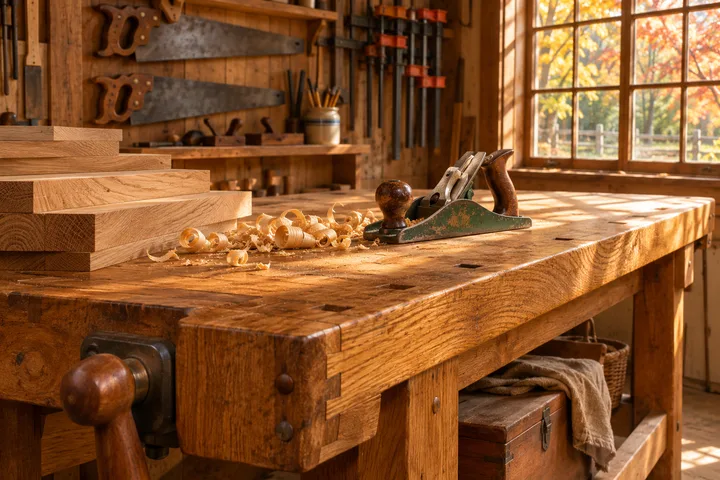
A first tool kit is easier to choose once you know what it must do. Read your first project's cut list and assembly steps, then buy, borrow, or rent against that list. A small kit you can use accurately is more useful than a full wall of tools you have yet to learn.
Begin with layout and workholding
A tape measure, square, and sharp pencil cover most early marking. Use the same reference edge as you transfer marks. Add clamps with enough reach and opening for the actual assembly, plus a stable surface that supports the work.
Choose a cutting method for the stock
A hand saw may suit occasional short cuts. Longer repeated cuts or panels can call for a different tool or a cut service at the lumber supplier. Confirm what the tool and blade are designed to cut, support the stock properly, and practice on scrap with the setup described in the manual.
Match drilling and fasteners
Use bits and driver tips appropriate to the hardware in the plan. Test the pilot hole and screw fit in offcuts from the same stock. Set aside sanding blocks or an appropriate sander, and make sample boards before committing to a finish.
Include protective equipment in the budget
Arrange lighting, wood-dust control, and eye and hearing protection appropriate for the job. Follow the manufacturer's guards and setup instructions. Check finishing product directions for ventilation, storage, and disposal, including any special instructions for used applicators.
Common questions
What should I buy first?
Choose measuring tools and suitable clamps once you know your project size. Then fill the cutting and drilling needs the plan actually calls for.
Can I borrow power tools?
Yes, if you have access to the complete setup, the manual, and instruction on safe use. Check the condition before starting.